


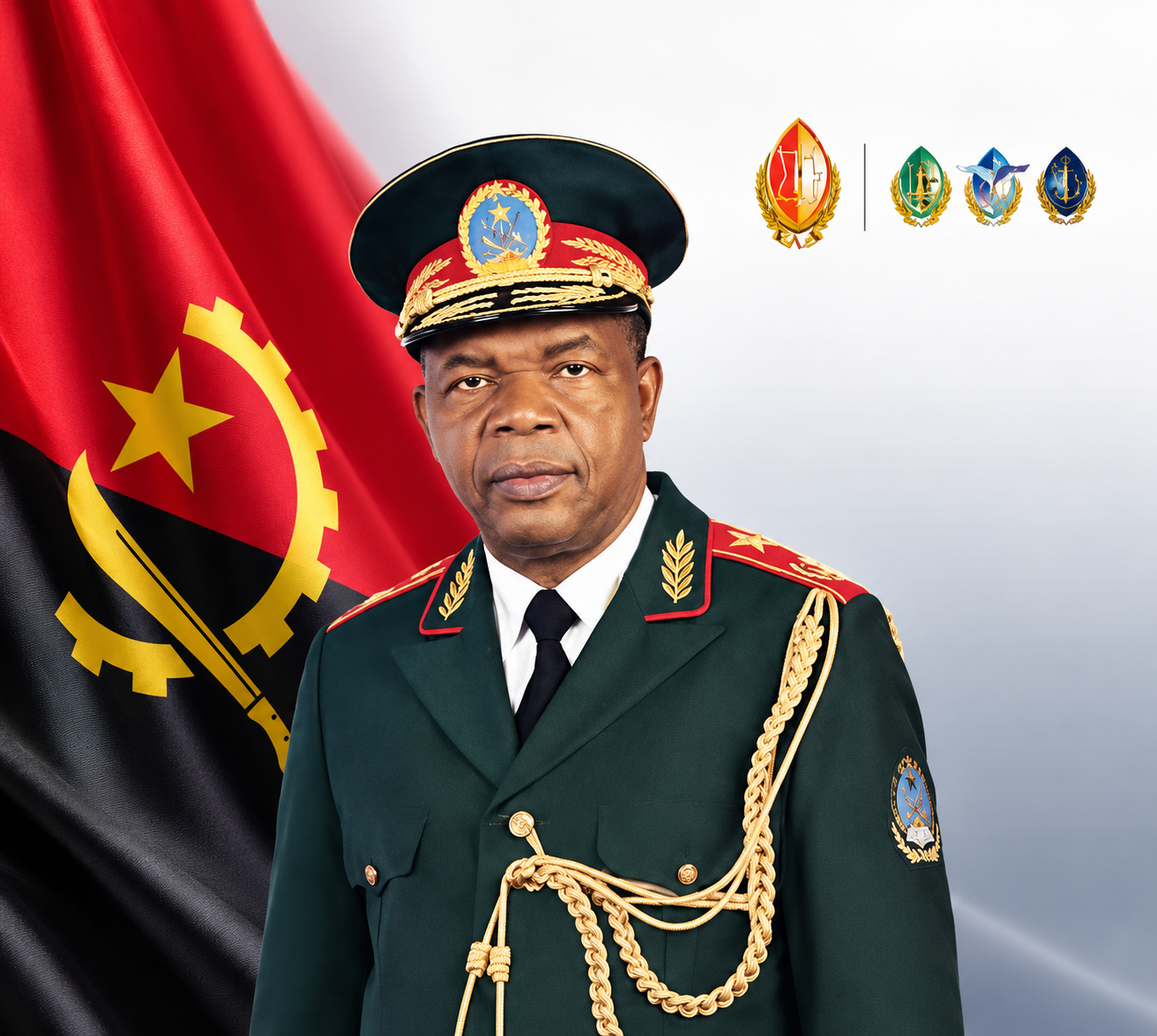
 9 octobre 2026Presidente da República felicita forças armadas angolanas pelo 35.° aniversárioPor ocasião do 35.º Aniversário da criação das Forças Armadas Angolanas, assinalado a 9 de Outubro, o Presidente da República, João Lourenço, saudou os efectivos militares e trabalhadores civis da instituição, destacando o seu papel na defesa da Independência, da soberania nacional e da integridade territorial de Angola.Por ocasião do 35.ºAniversário da criação das Forças Armadas Angolanas, histórico evento que se assinala no dia 9 de Outubro do corrente ano, apraz-me em nome do povo angolano e no meu próprio, saudar todos os Oficiais Generais e Almirantes, Superiores, Capitães, Subalternos, Sargentos, Praças, Marinheiros e Trabalhadores Civis que integram esta importante instituição castrense, guardiã da Independência e da soberania nacional, que em estreita cooperação com os demais Órgãos de Segurança do país defende, dia e noite, com firmeza e determinação a pátria, contra os potenciais riscos e ameaças à integridade territorial, dentro dos marcos legais estabelecidos pela Constituição da República de Angola e pelo Direito Internacional. A celebração desta magnífica e histórica data ocorre num momento excepcional, marcado, ainda, por algumas incertezas na geopolítica mundial, onde se desenrolam, de forma severa, relações internacionais atípicas, caracterizadas por conflitos e guerras convencionais, com maior realce para as regiões do Sahel, Europa do Leste e Médio Oriente. A par desta situação, Angola, país soberano que enfrentou reiteradas invasões externas, viveu longos anos de conflito armado interno e conquistou a paz décadas depois, mantém uma postura diplomática assente na resolução pacítica dos conflitos e guerras que caracterizam as relações internacionais contemporâneas, reflectidas nos princípios do multilateralismo, segurança e estabilidade. É nesta perspectiva que, trinta e cinco anos depois da sua criação, as Forças Armadas Angolanas continuam a cimentar a confiança nelas depositada pelo nosso povo, ao defenderem com firmeza e determinação cada palmo da nossa terra, dando o seu valioso contributo na defesa do território nacional, missão indeclinável para a qual destacados nacionalistas e jovens angolanos derramaram seu precioso sangue. Reafirmo, nesta ocasião solene, o compromisso e empenho do Executivo no processo de Reestruturação, Redimensionamento, Reequipamento e Rejuvenescimento em curso nas FAA. Aos Oficiais Generais, Superiores, Capitães, Subalternos e Sargentos, Praças, Marinheiros e trabalhadores civis, exorto a manterem-se firmes e de cabeça erguida no cumprimento da árdua missão de defender Angola, nossa terra, nossa pátria, honrando a memória dos heróis e de todos quantos, organizados e com lealdade, assumiram as rédeas da história, em diferentes circunstâncias da sua vida, ao pegarem em armas e em diferentes instrumentos de trabalho, com os quais deram o melhor de si na defesa, na reconstrução e no desenvolvimento do país, profundamente conscientes de que "A Pátria aos seus Filhos não Implora, Ordena!" Aos militares e trabalhadores civis acamados, desejo rápidas melhoras e breve regresso ao convívio dos seus familiares, colegas e amigos, na certeza de que juntos, unidos e coesos, vamos enfrentar com a mesma coragem e determinação de sempre os desafios do presente e do futuro. BEM-HAJA! O PRESIDENTE DA REPÚBLICA E COMANDANTE-EM-CHEFE DAS FORÇAS ARMADAS ANGOLANAS JOÃO MANUEL GONÇALVES LOURENÇO
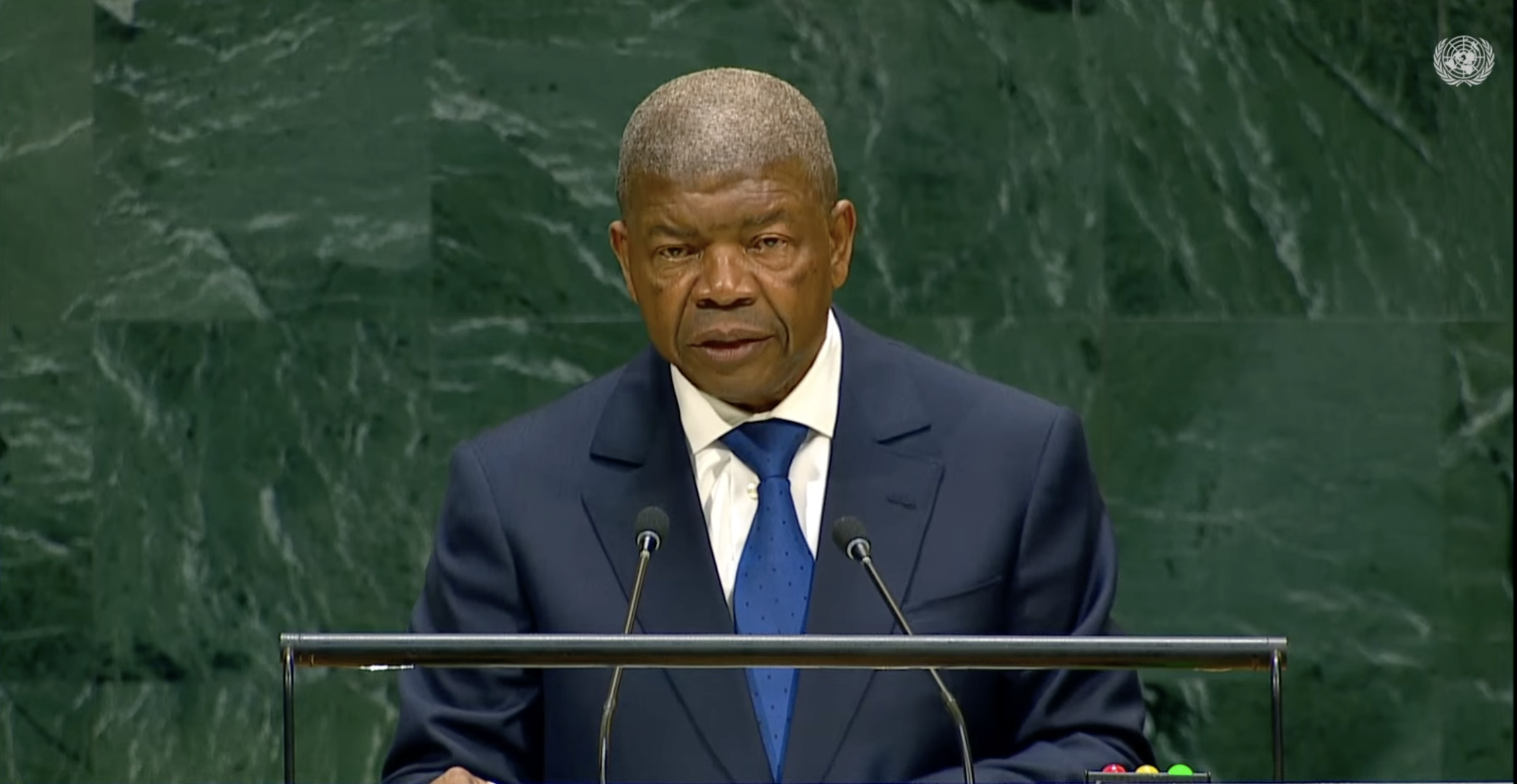 22 septembre 2026President João Lourenço Addresses the 81st Session of the United Nations General AssemblyThe President of the Republic, João Lourenço, called for strengthening the United Nations’ central role in addressing the complex challenges facing contemporary international relations during the 81st Session of the United Nations General Assembly.His Excellency António Guterres, Secretary-General of the United Nations, His Excellency Khalilur Rahman, President of the 81st Session of the United Nations General Assembly, Your Excellencies, Heads of State and Government, Distinguished Delegates, Ladies and Gentlemen, Allow me to congratulate His Excellency Khalilur Rahman on his election as President of the Eighty-First Session of the United Nations General Assembly, in the hope that, with his extensive experience and profound knowledge of our international organisation, he will render valuable service to the United Nations, which faces complex challenges that must be overcome if it is to reassume its central role in addressing the major issues of contemporary international relations. I also congratulate Ms. Annalena Baerbock, who preceded him in these noble duties and spared no effort during the mandate she carried out with undeniable competence to preserve the role of the United Nations in addressing the issues of greatest concern to the international community today. I would also like to congratulate His Excellency Secretary-General António Guterres, who has worked tirelessly and devoted himself with unwavering dedication to the great causes of our time, building bridges for dialogue in the search for peaceful solutions to the challenges facing humanity today. We particularly acknowledge his exemplary contribution as a man of dialogue, a defender of the Charter of the United Nations and International Law, a tireless advocate of the need to protect the planet from the harmful effects of climate change, and a pioneer of the global debate on the governance of Artificial Intelligence. Mr. President, Your Excellencies, The United Nations General Assembly always takes place in September. This year’s session, however, is being held 25 years after the terrorist attacks that destroyed the Twin Towers in New York and struck other targets on American soil, causing thousands of civilian deaths and injuries, some of whose victims continue to bear the physical and emotional scars to this day. We take this opportunity once again to condemn terrorism in all its forms, wherever it occurs. In addition to terrorism, which remains active in some countries, particularly in Africa, the global peace and security situation has continued to deteriorate year after year, to the point where we now observe, with profound concern, that the world has taken a path that is bringing it alarmingly close to a global conflagration. Over the years, Angola has sought to make its contribution to building and consolidating peace in Africa and throughout the world. However, the current situation does not in any way reflect the aspirations of peoples for harmony and understanding among nations. Among these contributions to peace are several initiatives undertaken in Africa, of which I would highlight the 21st Extraordinary Conference of the African Union on Strengthening Conflict Prevention and Resolution Mechanisms in Africa, recently held in Luanda, which opened a serious and promising perspective for resolving the challenges affecting peace and stability on the African continent. Particular attention should also be given to the Third Edition of the “Call for Peace, an End to Wars and Respect for International Law” Initiative, held in Luanda in July this year in partnership with the United Nations Alliance of Civilizations. Within this same context, Angola will host the Pan-African Forum for the Culture of Peace and Non-Violence — Luanda Biennale next October. My country takes seriously its commitment to matters relating to peace, the resolution of conflicts through dialogue, respect for the rules governing international relations and the defence of International Law. Angola spares no effort in bringing conflicting parties closer together and building consensus in Africa. We remain available to devote our attention and contribute to resolving the conflicts that persist on the continent. Our approach to peacebuilding initiatives is based on the pursuit of realistic and sustainable solutions, guided by the principle of African solutions to African conflicts. We call for the effective implementation of United Nations Security Council Resolution 2719, which should ensure predictable, adequate and sustainable financing for African Union-led peace support operations authorised by the United Nations Security Council, because investing in Africa’s capacity to prevent and resolve conflicts is also an investment in international peace and security. Your Excellencies, Ladies and Gentlemen, This session of the General Assembly holds particular significance for my country, as it is taking place in the year in which we celebrate the 50th anniversary of the admission of the Republic of Angola as a full member of the United Nations, which occurred in December 1976. At the time, this represented a historic achievement for the Angolan people, who had waited more than twelve months after the proclamation of National Independence for the country to be admitted as a fully recognised member of the international community. This event of great significance in the history of my country took place within a global context in which Angola became a victim of confrontation among world powers competing for control over spheres of influence during the Cold War. Our entire journey towards achieving peace in 2002 was closely linked to the disputes of that era, which constrained the fulfilment of the dreams of the Angolan people and their plans to build a prosperous nation committed to its development. These events belong to the past, but they left us with a wealth of experience and lessons that we have used to build peace, understanding and reconciliation among all Angolans and to shape the direction of our foreign policy. The consolidation of peace and national reconciliation is now a reality, as demonstrated by concrete gestures, including ceremonies honouring the principal political leaders of the national liberation struggle and representatives of all sectors of civil society, within the framework of the 50th anniversary of National Independence. Also within this framework, a monument in memory of all the victims of the political conflicts that occurred in Angola from the proclamation of National Independence until the achievement of peace in April 2002 will be inaugurated in Luanda next October. Mr. President, Your Excellencies, Today, we are witnessing the marginalisation and violation of the rules governing international relations, with the logic of force, intimidation and the imposition of values arising from the unilateral vision of certain countries in defence of their exclusive interests increasingly prevailing. The instability affecting various regions of our planet is a direct consequence of this approach, as can be observed in the conflicts currently unfolding in Europe, the Middle East, the Persian Gulf and Africa, while tensions continue to rise in the Asia-Pacific region. Based on what we have observed, we see no encouraging signs regarding the prospect of reaching peace agreements in the near future in the war between Russia and Ukraine, the Israeli-Palestinian conflict in the Middle East, and the conflict in the Persian Gulf. We condemn genocide against defenceless populations — the elderly, women, children, bedridden patients, healthcare professionals, journalists and workers of international humanitarian organisations — who are often deprived of access to the most basic human rights and essential necessities of life, such as water, food and medicine. The displacement of Palestinians from their homes and lands through the expansion of Israeli settlements in the West Bank deserves the strongest international rejection and condemnation. Attempts to dominate countries and entire regions of the world through force of arms are leading the world towards catastrophe. The food, energy and humanitarian security situation of countries and of the world in general has deteriorated considerably since the outbreak of the war in Ukraine and, more recently, the war against Iran. The consequences of these wars have been disastrous, particularly given the restrictions on freedom of maritime navigation through the Strait of Hormuz and the Bab el-Mandeb Strait. This situation has created a serious risk of disruption to global supply chains, particularly food and energy supply chains, with devastating consequences for the most vulnerable countries. Today, we live in an environment of global disorder in which the use of force prevails over the force of reason and law, in blatant opposition to the rules governing international relations. In light of this situation, there is a pressing need for profound reflection within the United Nations, the only institution on the planet with universal legitimacy and which brings together all the nations of the world, in order to identify the best solutions for achieving global peace. Our appeal is that we act with wisdom and courage to restore the central role of the United Nations in fulfilling its responsibility and irreplaceable role in maintaining world peace. Ladies and Gentlemen, We are concerned by the unjust treatment and profound lack of human sensitivity that Cuba has endured for decades as a result of an embargo that continues to worsen the living conditions of the Cuban people. Cuba is not a terrorist State. It neither produces nor possesses nuclear, chemical or biological weapons that could constitute an imminent or real threat to the national security of other countries, including its neighbours. On the contrary, Cuba contributed to the fall of South Africa’s racist and segregationist Apartheid regime, a regime widely and unanimously condemned by the international community, and consequently became one of the signatories of the New York Accords of December 22, 1988. Given that the embargo is primarily responsible for the extremely difficult situation faced by Cuba and the Cuban people, and because it is inhumane, unjust and contrary to the principles and norms of International Law, we once again call for an end to the embargo against Cuba. Ladies and Gentlemen, Today, we are witnessing the direct involvement of some permanent members of the United Nations Security Council in some of the bloodiest and most destructive conflicts currently taking place in Europe and the Persian Gulf. This is a matter of concern and sets a poor example for the rest of the world. These countries rendered a great service when they freed humanity from the horrors of Nazism, Fascism and the Holocaust, and they should therefore preserve this legacy and their historic role as liberators. At a time when good governance within countries is widely advocated, global governance also requires a new world order that is more democratic and just, and which is not based solely on the power of the restricted club of victors of a war that took place eight decades ago. Since then, the world has changed considerably. New countries have emerged that were colonies at the time and are today strong economies with significant advances in science and technology. It is therefore becoming increasingly pressing and urgent to undertake a profound reform of the United Nations Security Council, in which Africa, Latin America and Asia should be adequately represented as permanent members with all the powers inherent in that status. In this context, the Republic of Angola reaffirms its full support for the African Common Position enshrined in the Ezulwini Consensus and the Sirte Declaration . The voice of Africans must be heard under all circumstances and at all times in strategic decision-making processes concerning peace, global security, development financing, climate issues and the global governance of Artificial Intelligence. Mr. President, Your Excellencies, Peace and development are inseparable, which requires us to consider strategies capable of accelerating the implementation of the 2030 Agenda. The important decisions taken within the framework of the Pact for the Future and the Seville Commitment can help advance development programmes in Africa. However, to achieve tangible results in this area, it is essential to ensure access to affordable financing, debt relief, technology transfer, capacity-building and greater participation in international financial institutions. African countries spend far more resources on the exorbitant costs of debt servicing than they are able to invest in health, education and infrastructure programmes. This situation clearly limits productive investment, deepens inequalities and economic disparities, and threatens economic and social stability. In light of this, these distortions must be corrected. I therefore reiterate the call for the immediate reform of the international financial architecture to make it fairer, more equitable, democratic and oriented towards the progress and well-being of humanity. These challenges are complex in themselves and are further aggravated by climate change, which has a severe impact on Africa through prolonged and severe droughts, floods, desertification, food insecurity and population displacement. This situation clearly illustrates the need to establish predictable, accessible and additional climate financing without further increasing the debt burden of developing countries. Today, peoples and nations have an opportunity to achieve a qualitative leap in their overall living conditions through fair development-support mechanisms and the tools provided by Artificial Intelligence to improve education, healthcare, agriculture, public services, scientific research and economic productivity. In this regard, I believe that the Global Digital Compact opens new prospects for cooperation to bridge the digital divide, expand digital public infrastructure, promote training and innovation, strengthen cybersecurity and build more inclusive, safe and human-centred governance of Artificial Intelligence. To this end, I believe there is a need to strengthen North-South, South-South and triangular cooperation so that the digital revolution becomes an instrument of inclusion, sovereignty and development rather than a source of dependency and inequality. Your Excellencies, We are approaching the end of the current Secretary-General’s mandate and the selection of his successor, a process of great importance given that the person chosen must possess the independence, integrity, competence and courage required to build consensus, defend the Charter, promote conflict prevention, lead the necessary reforms and seek solutions to address the Organisation’s financial crisis. The Republic of Angola reaffirms its commitment to the United Nations, convinced that only within this institution will it be possible to safeguard the achievements of recent decades in upholding International Law. Only within the framework of the United Nations can we advance the search for peaceful solutions to the conflicts affecting the world, within a system in which multilateralism serves as the mechanism that brings together ideas, political will and initiatives conducive to world peace. We, today’s political leaders and governments, will be judged in the future by our ability to replace confrontation with dialogue, predatory competition with cooperation, exclusion with solidarity, and the force of arms with the force of law. Only in this way will we build a fairer, more peaceful and inclusive international order capable of guaranteeing the progress and well-being of humanity, leaving no one behind. No weapon is more powerful than diplomacy, because other weapons are used only to destroy lives, infrastructure, dreams and life projects, while diplomacy is the only weapon capable of uniting, repairing, building and saving lives, peoples, nations and humanity. For this reason, the United Nations must equip itself with the appropriate tools and means to fulfil the theme of the 81st Session of its General Assembly: “Restoring Trust, Managing Transformation: A United Nations That Delivers for Everyone.” Thank you very much for your attention.
22 septembre 2026President João Lourenço Highlights Strategic Importance of the Lobito Corridor at High-Level MeetingThe President of the Republic, João Lourenço, highlighted the Lobito Corridor in Luanda as a strategic instrument for advancing regional integration and promoting shared prosperity among the countries of the region.
Your Excellencies Jean-Pierre Bemba Gombo and Situmbeko Musokotwane, Heads of Delegation of the Democratic Republic of the Congo and the Republic of Zambia; Her Excellency Anna Bjerde, Managing Director of Operations of the World Bank, and her delegation; Your Excellencies, Members of the Governments of Angola, the Democratic Republic of the Congo and Zambia; Distinguished Senior Officials of Multilateral Organisations; Distinguished Members of the Diplomatic Corps accredited to Angola; Distinguished Representatives of Development Partners; Ladies and Gentlemen, It is with great pleasure that we welcome you to Luanda so that, with the support of our development partners, we may continue advancing towards the realisation of our vision of regional integration and shared prosperity among our peoples. Our three countries have already met and worked together in different formats to establish the Lobito Corridor as a strategic priority and to align our respective visions on governance, investment and transit facilitation, including through the institutionalisation of the Lobito Corridor Transit Transport Facilitation Agency. This High-Level Meeting on the Lobito Corridor Coordination Mechanism therefore represents a further step towards consolidation, aimed at raising coordination to a more operational level by ensuring regulatory harmonisation and the alignment of facilitation processes, with clearly defined targets, responsibilities and regular monitoring. The Lobito Corridor has increasingly established itself as a vital link between Angola, the Democratic Republic of the Congo and Zambia, with enormous potential to boost trade, production, logistics and economic transformation throughout our region. By connecting the Atlantic Ocean to inland production areas, this corridor can become a genuine platform for development and for advancing the African Continental Free Trade Area, contributing to regional economic integration and facilitating intra-African trade, with significant benefits for our economies and populations. The presence of senior government officials from the three countries that make up the corridor, together with multilateral and bilateral development partners, particularly the World Bank, demonstrates a shared understanding that the success of the Lobito Corridor depends, above all, on clear strategic alignment and effective coordination among all stakeholders. Development partners play a central role in this process. Their support has been crucial not only in mobilising catalytic investment, but also in supporting structural reforms and regulatory harmonisation — essential dimensions for strengthening the corridor’s credibility, reducing risks, attracting private capital and delivering tangible results. It is precisely within this context that the Lobito Corridor Coordination Mechanism has been established as a platform for coordination and strategic alignment. Its purpose is not to create new structures or additional bureaucracy, but rather to ensure that all initiatives promoted by multilateral institutions, bilateral partners and private investors are properly coordinated, avoiding duplication, fragmentation and parallel efforts that could diminish their collective impact. Complementarity among projects, financing and reforms is key to maximising results and accelerating implementation. It is important to emphasise that this is not merely about transport infrastructure. The Lobito Corridor must become a genuine engine of economic transformation. It must drive the development of agribusiness, promote industrial transformation, strengthen regional value chains and create sustainable economic opportunities and decent jobs, with particular attention to young people and women, ensuring that economic growth translates into tangible improvements in the quality of life of the populations living in the areas covered by the corridor. We consider it essential to ensure that the backbone of the Lobito Corridor — its railway, road and energy infrastructure — is fully rehabilitated and interconnected in order to guarantee efficiency and competitiveness. We therefore consider it relevant and strategic to implement the railway rehabilitation projects in the Democratic Republic of the Congo, as well as the railway and road connections to the Republic of Zambia and the interconnection of Angola’s power transmission network with the region, benefiting both local populations and productive activities in our two neighbouring countries. Without this effort, the establishment of an effective development corridor for our countries, integrated into the global economy, will become considerably more challenging. Angola has recorded positive and sustained economic growth in recent years, underpinned by continuous efforts towards macroeconomic stabilisation and economic diversification. At the same time, we have sought to create better conditions for strategic investment by strengthening the confidence and predictability required for long-term projects. Angola’s partnership with the World Bank, the African Development Bank, the European Union, the United States of America and other multilateral, bilateral and private-sector partners has been decisive in advancing this project. Their support contributes to strengthening institutional reforms, thereby building confidence and credibility among prospective investors. Within this framework, I would like to highlight a concrete example of the transition from vision to implementation: on December 17, 2025, a US$753 million financing package was signed for the Lobito Atlantic Railway (LAR), comprising US$553 million from the U.S. International Development Finance Corporation (DFC) and US$200 million from the Development Bank of Southern Africa (DBSA), aimed at supporting the rehabilitation and modernisation of the railway line and associated logistics components of the Lobito Corridor. This step is significant because it confirms that the corridor is capable of mobilising structured, long-term financing. It also strengthens the credibility and bankability of the project, creating a demonstration effect for new investors. At the same time, it places greater collective responsibility upon us to ensure that signed financing translates into construction on the ground, that operations are efficient, reforms are implemented and results are measured. For this reason, it is essential that the goodwill surrounding the Lobito Corridor be translated into operational decisions and implementation instruments. We need to align priorities, define roadmaps, establish responsibilities and create monitoring mechanisms that guarantee real, measurable and lasting impact. Angola reaffirms its commitment to this vision of regional cooperation, to strengthening institutions and to maintaining a close and transparent partnership with all the development partners represented here. We are convinced that, by working in an aligned and coordinated manner, we will be able to transform the Lobito Corridor into a genuine catalyst for inclusive and sustainable development. Ladies and Gentlemen, The Lobito Corridor is more than an infrastructure project; it is a project of trust, integration and a shared future. Its true success will be measured not only by kilometres of railway or volumes of cargo transported, but by the impact it has on people’s lives: young people with jobs, families with income, communities with new opportunities and more resilient economies. It is this commitment to our people that must guide our decisions and accelerate our action. Angola reaffirms its commitment to cooperative leadership and responsible implementation, with transparency and a sense of urgency, so that the results become visible in the daily lives of our citizens. With these words, I declare open the High-Level Meeting on the Lobito Corridor Coordination Mechanism. Thank you very much for your attention.22 septembre 2026Message from the President of the Republic and Chairperson of the African Union on the Day of Peace and Reconciliation in AfricaPresident João Lourenço, in his capacity as the African Union Champion for Peace and Reconciliation in Africa and Chairperson of the African Union, called for greater harmony, unity and peace across the African continent on the occasion of the Day of Peace and Reconciliation in Africa.
African Sisters and Brothers, On this January 31, dedicated to Peace and Reconciliation in Africa, I feel deeply honoured, in my capacity as the African Union Champion for Peace and Reconciliation in Africa and Chairperson of the African Union, to address the worthy daughters and sons of Africa and convey my sincere wishes for harmony, unity and peace across our continent. This commemoration reminds us of the importance of remaining committed to building a stable and peaceful Africa, where peace and reconciliation are permanent priorities, as envisioned in Agenda 2063, which embodies “The Africa We Want.” This day is not merely a celebration; it is an invitation to reflect on the peace and security challenges that, unfortunately, continue to persist across our continent. This exercise of profound reflection brings to mind some of the eminent pioneers of Africa’s freedom and independence, who were able to capture the aspirations of the African people. As Nelson Mandela said, “Reconciliation does not mean forgetting or trying to bury the pain of conflict, but that reconciliation means working together to correct the legacy of past injustice.” Likewise, Kwame Nkrumah reminded us that “Divided we are weak; united, Africa could become one of the greatest forces for good in the world.” These remarkable figures left us an enduring lesson: peace and reconciliation are both a moral duty and a strategic necessity. We will not be able to fully achieve them while our continent continues to face challenges ranging from coups d’état, terrorism and violent extremism to armed conflicts and community tensions, all of which undermine and seriously constrain our efforts to build progress, development and well-being for all Africans. In the face of these challenges, I wish to emphasise today the urgency of never abandoning our determination to remain steadfast and mobilised in transforming vulnerabilities into strength, divisions into unity and threats into opportunities. African Sisters and Brothers, The African Union has the necessary mechanisms to provide appropriate and robust responses to the crisis situations referred to above. However, we must all converge our efforts and attention towards a common objective, working together in unity and cohesion to ensure the operational readiness and effectiveness of these mechanisms whenever they need to be activated to safeguard stability, peace and security — factors which, taken together, contribute to revitalising African economies and advancing the development of our continent. Ladies and Gentlemen, Peace and reconciliation in Africa will become more lasting achievements whenever our societies strengthen awareness of the importance of mutual understanding among all people. The active participation of women and young people is crucial, given their particular sensitivity to the consequences of conflicts and the fact that they are often among those most affected by them. It is therefore essential that the voices of women and young people be heard. They have much to convey to politicians, government leaders and African societies in general about their perspectives on conflicts and their role in finding solutions to these challenges. To this end, our continent has the Pan-African Forum for the Culture of Peace and Non-Violence in Africa. The forum, also known as the **Luanda Biennale**, will hold its fourth edition next October, during which we hope to count on the active participation of the population groups mentioned above, given the central role they can play in contributing to the peaceful resolution of the disputes that continue to affect our continent. The Luanda Biennale, jointly organised by the Government of the Republic of Angola, the African Union and UNESCO, is more than an event. It is a space where young people can express their aspirations, where women can share their experiences in mediation and reconstruction, and where our societies can learn to transform differences into driving forces for understanding, harmony, democracy, peace and development. Thank you very much for your attention!22 septembre 2026New Year’s Greetings from the Diplomatic CorpsThe President of the Republic of Angola, João Lourenço, accompanied by the First Lady of the Republic, Ana Dias Lourenço, received New Year’s greetings from the Diplomatic Corps accredited to Angola during a traditional ceremony held this year at the Protocol Complex of the Presidency of the Republic in Luanda.
Your Excellency Ambassador Saadia El Alaoui, Dean of the Diplomatic Corps; Your Excellencies, Ambassadors and Heads of Diplomatic Missions; Your Excellencies, Representatives of International Organisations and other foreign entities accredited to the Republic of Angola; Ladies and Gentlemen; Your Excellencies, It is with great honour and appreciation that my wife and I welcome each of you today, distinguished members of the Diplomatic Corps, International Organisations and other foreign entities accredited to the Republic of Angola, to this traditional annual ceremony. This occasion is not only an opportunity to reaffirm the bonds of friendship and cooperation between our countries, but, above all, an opportunity to reflect on the year that has ended, on the challenges that lie ahead for the collective action of our countries, and on the unpredictable, turbulent and dangerous international environment in which we live today. Allow me to extend my most sincere wishes to you all for a New Year of peace, good health, prosperity and well-being, and may this new chapter be guided by stronger political dialogue and a renewed commitment to international cooperation and multilateralism. We listened very attentively to the message delivered by Her Excellency Saadia El Alaoui, Ambassador Extraordinary and Plenipotentiary of the Kingdom of Morocco to the Republic of Angola and Dean of the Diplomatic Corps accredited to Angola. I thank her for the words addressed to my country, as well as for the wishes of well-being and prosperity extended to the Angolan people, to me and to my family. As Your Excellencies are aware, the year that has ended held special significance for Angola, as we celebrated the 50th Anniversary of National Independence, an important milestone in our history that invited us both to celebrate and to reflect deeply on the path we have travelled, the challenges we have faced and the prospects for the future. Fifty years after the proclamation of our National Independence, Angola stands today as a stable country committed to peace, stability, national reconciliation, good governance, democracy, sustainable development and cooperation among nations. Your Excellencies, Over the past year, the Republic of Angola focused its diplomatic efforts on intensifying relations with its partners, with the aim of building an increasingly solid and credible foundation of trust. It was a year marked by several achievements that raised Angola’s international profile, not only through the celebration of the 50th anniversary of National Independence, but also through our assumption, for the first time in our recent history, of the rotating Chairmanship of the African Union, a development that increased the responsibilities of the Republic of Angola both at the continental and global levels. We have exercised this responsibility in a particularly demanding and complex context, characterised by persistent conflicts in several regions of Africa and the world, political instability, recurring coups d’état and democratic setbacks in some parts of Africa, serious health, economic and humanitarian crises, climate and energy challenges, and a worrying weakening of traditional mechanisms for dialogue and international cooperation. As Chair of the African Union, Angola placed at the centre of its agenda the financing of critical infrastructure development in Africa, with particular emphasis on projects that contribute to improving interconnectivity among the various regions of our continent, Africa’s integrated development and the building of **“The Africa We Want.”** It was in this spirit that, in June 2025, we hosted the U.S.–Africa Business Summit in Angola and, in November of the same year, the 3rd Conference on Financing for Infrastructure Development in Africa, with the objective of mobilising investment in strategic infrastructure aligned with the African Union’s Agenda 2063 and the African Continental Free Trade Area. The holding of these two events enabled us to mobilise considerable financial resources for investment in important sectors of Africa’s economic life, including integrated economic corridors, railway networks, transnational highways, the African Single Electricity Market and the development of the African Aviation Master Plan, as well as digital transformation, health, agribusiness and tourism. Likewise, representing Africa, Angola sought to assert the continent’s voice in the main global governance forums, notably the G20 Summit in South Africa, TICAD in Japan, the African Union–European Union Summit in Luanda, the Fourth International Conference on Financing for Development, held in Seville, Spain, and the 80th Session of the United Nations General Assembly in New York. At the various events in which we participated, we advocated positions capable of contributing to the reform of the international financial architecture, fairer access to development financing, the pursuit of sustainable debt solutions and a balanced response to global shocks that disproportionately affect developing countries. We had the opportunity to reaffirm our full support for strengthening the rules-based global trading system, particularly through the ongoing reform processes within the World Trade Organization. We also called upon the G20 to view the African Continental Free Trade Area not merely as an African project, but as an important contribution to the stability of global trade. Within the framework of the positions we have taken, we highlighted the imperative need for Africa’s industrialisation, the development of African human capital and technological innovation. We also emphasised, in specific forums, the importance of committing to a partnership based on equality, mutual respect and shared responsibility as a response to global challenges. The views we expressed at the African Union–European Union Summit deserve particular emphasis. During the Summit, the commitment to the Joint Vision for 2030 was highlighted, aligned with the African Union’s Agenda 2063, the objectives of the European Union and the United Nations 2030 Agenda. Given that the European Union is Africa’s leading trade and investment partner, it was natural for us to seek its support for the implementation of the African Continental Free Trade Area and the strengthening of regional value chains, including those involving critical minerals, as well as cooperation on connectivity infrastructure projects. Your Excellencies, We are approaching the end of the rotating Chairmanship of the African Union, which I assumed in February of last year with a commitment to promoting Peace, Security and Stability in Africa, without which the African continent will not be able to fully achieve its development objectives. At the African Union level, the need to bring an end to armed conflicts on the continent was established as an objective. This goal has not yet been achieved, requiring us to continue our efforts to fulfil the aspiration of **Silencing the Guns in Africa**. At no point have we spared any effort to contribute to resolving conflicts on the continent, particularly those affecting Sudan and the Democratic Republic of the Congo. Angola continues to play an important role in the peace process in the DRC, with its contributions helping to pave the way for the signing of the peace agreement in Washington on December 4, 2025, between the DRC and Rwanda. This was undoubtedly a significant historic moment that must not be squandered by either party. Both sides share responsibility for its implementation so that lasting peace can be achieved in the Great Lakes region. The ceasefire negotiated in Doha, Qatar, between the Government of the DRC and the M23 must be implemented, while we encourage the Congolese government authorities and civil society to proceed with the inter-Congolese dialogue without further delay. It is our conviction that the challenges Africa continues to face require swift, objective and coordinated responses that go beyond the security dimension and must incorporate other components, such as economic development, social inclusion, good governance and the strengthening of State capacities. When properly implemented, this approach removes the arguments used by those who promote unconstitutional changes of government in Africa in an attempt to justify coups against democracies and legitimately constituted authorities. In light of this reality and given the recurrence of coups d’état on the African continent, there is an increasing need to strengthen measures to discourage and condemn these practices, which are reprehensible in every respect. We take this opportunity to demand the unconditional release of President Mohamed Bazoum, who was deposed in a coup d’état in Niger, as well as Domingos Simões Pereira, President of PAIGC in Guinea-Bissau, a country that recently held elections but where, in an unprecedented case in the history of electoral processes in Africa, the actual election results were never made public. Your Excellencies, The world is facing an alarming reversal of democratic achievements that have already been attained and which, over the past eight decades, have contributed to global peace, stability and security, as well as to the economic and social development of nations. Respect for human rights, the defence of State sovereignty and the territorial integrity of countries have constituted the essential foundation upon which International Law and the norms governing contemporary International Relations were built. Yet, from one moment to the next, these foundations are beginning to crumble, placing at risk all the achievements made by humanity since the end of the Second World War. Against this backdrop, the United Nations finds itself in a situation of genuine humiliation, without the capacity to fulfil the role entrusted to it, a role that for decades was of vital importance in ensuring global stability. This deliberate erosion of the responsibilities of the United Nations is giving rise to international disorder and to the replacement of the rule of law by the law of force. An approach based on double standards does not favour an impartial response to the major political challenges confronting the world today. We must all be aligned on the fundamental importance of multilateralism as the only means of contributing to the restoration of world order and preventing the geopolitical and economic reconfiguration of the world solely for the benefit of the superpowers. In this context, we reiterate the importance of the central role of the United Nations as a guarantor of international peace, stability and security, as well as other indispensable forums for coordination, political dialogue and collective action, which are increasingly necessary to prevent the redrawing of borders in Europe, Africa, the Middle East and the Caribbean, where several countries face the imminent danger of Balkanisation. The United Nations cannot be held hostage by the unilateral actions of world powers that are themselves permanent members of its Security Council. Your Excellencies, I take this opportunity to express our appreciation for the work carried out by your diplomatic missions and the organisations you represent in strengthening cooperation and friendship between our respective countries and peoples. I wish to assure you of Angola’s full openness and readiness to work together to contribute to building a world of peace and harmony, where justice and mutual respect prevail. I wish you all a Happy and Prosperous New Year.22 septembre 2026Closing Address Delivered by the Chairperson of the African Union, João Lourenço
Your Excellencies, Heads of State and Government of the African Union and the European Union; His Excellency António Costa, President of the European Council; His Excellency Mahmoud Ali Youssouf, Chairperson of the African Union Commission; Distinguished Guests; Ladies and Gentlemen, After two days of intensive and highly productive work, we have reached the conclusion of this 7th African Union–European Union Summit, held under the theme: **“Promoting Peace and Prosperity through Effective Multilateralism.” I would like, first and foremost, to express my profound gratitude for your active participation and for the commitment demonstrated here to the importance we attach to deepening and strengthening the strategic partnership that has existed for 25 years between our two continental organisations. The deliberations resulting from this Summit reflect a profound collective vision of the ties that unite our two continents, which are destined and compelled to move forward together, build common understandings and jointly seek solutions to issues of shared concern, as demonstrated throughout our discussions on Peace and Security, Prosperity, Migration and Mobility. We agreed that the defence of effective multilateralism remains our best hope for building a fairer, more balanced, peaceful and prosperous world. Your Excellencies, This Summit has made it clear to all of us that the European Union–African Union partnership is not based merely on a set of ideas, but above all on concrete actions pursued with great dynamism, a practical approach and results that have a transformative impact on our peoples. The positive evolution of relations between the European Union and the African Union since the Brussels Summit in 2022 is reflected in the highly positive results achieved through our cooperation in peace and security, health, climate and energy cooperation, digital transformation, trade and investment, as well as mobility and migration. The specific aspects of these important achievements are reflected in the Implementation Report of the Declaration of the 6th Summit, adopted within the framework of this meeting in Luanda, which highlights the progress achieved while also recognising the areas where further progress is required. The critical assessment we continue to make of our cooperation and of the actions we undertake jointly enables us to continuously improve and refine our cooperative efforts. This aspect, to which we attach fundamental importance, is reflected in the outcomes of this forum, which has concluded successfully, as embodied in the **Luanda Declaration on the 7th African Union–European Union Partnership Summit**. The Declaration reflects our political will to continue moving forward together along paths that will lead to results with a positive impact on development and on improving the living conditions of the peoples of Africa and Europe. In this context, I would like to highlight the fact that we agreed on the need to expand cooperation in the area of peace and security by promoting stronger joint responses to terrorism and violent extremism; To intensify climate action, including financing for adaptation and resilience, as well as support for Africa’s energy transition; To strengthen economic ties through commitments aimed at boosting investment in infrastructure, manufacturing and sustainable agriculture; To expand mobility and people-to-people exchanges, ensuring that migration is safe, orderly and beneficial to both continents; and To promote youth empowerment through education, skills development and entrepreneurship programmes. Your Excellencies, We have often stated that African Union–European Union cooperation is dynamic and that, for this very reason, we intend always to go beyond what we have already achieved and to establish perspectives that expand results and mutual benefits, while strengthening our shared ambition to raise the objectives we seek to achieve to ever higher levels. It is therefore our firm conviction that, during the 2028 Summit to be held in Europe, our shared vision regarding industrialisation, trade and investment, sustainable financing, leadership on climate change, digital and innovation partnerships, and the strengthening of our collective action within the multilateral system will become clearer and even more far-reaching. Your Excellencies, I am certain that we will leave here deeply committed to implementing our decisions, increasingly confident that our joint efforts generate clear mutual benefits, bring us ever closer together, strengthen and improve mutual understanding, and deepen our role within the community of nations as partners determined to contribute to building a more balanced world — one of peace, justice and prosperity for all the peoples of our planet. Once again, I thank all the delegations that came to Luanda and honoured this major event with their presence. I also wish to express my sincere appreciation and commendation to the teams of the African Union Commission and the European Commission for their tireless work in making this Summit possible and ensuring its undeniable success. I wish you a safe journey back to your respective countries and express the hope that, in 2028, at their 8th Summit, the African Union and the European Union will enthusiastically celebrate new achievements along the path that we have travelled together over the past 25 years. As the present year will come to an end in just a few days, allow me to extend to you all our best wishes for a New Year of peace, prosperity and harmony among the peoples of our planet. Thank you very much for your attention.22 septembre 2026Address by President João Lourenço at the 21st Extraordinary Summit of the African UnionPresident João Lourenço, Champion for Peace and Reconciliation in Africa, Outlines the Continent’s Security Situation
Your Excellency Évariste Ndayishimiye, President of the Republic of Burundi and Chairperson of the African Union; Your Excellencies, Heads of State and Government; Your Excellency Mahmoud Ali Youssouf, Chairperson of the African Union Commission; Your Excellencies, Representatives of the Regional Economic Communities and other African Regional Organisations; Ladies and Gentlemen, Angola has been entrusted with the honour and responsibility of hosting this Extraordinary Summit on Strengthening Conflict Prevention and Resolution Mechanisms in Africa, which is taking place at a particularly turbulent time, marked by great uncertainty regarding the future of humanity. We will focus particularly on issues of peace and security in Africa, while also addressing the concerning security situations arising from the war in Europe, the Middle East and the Persian Gulf, as well as threats to global stability in other parts of the world. We are witnessing the most blatant violations of International Law and disputes over hegemonic control of reserves of major energy resources, particularly oil, natural gas, minerals and rare earth elements, of which our countries are among the main holders of these highly sought-after resources. In order to weaken us, attempts are being made to undermine our institutions and our societies by creating and fuelling all forms of division among us, which may degenerate into conflicts and wars. Our weaknesses and vulnerabilities must not undermine our collective capacity to prevent and resolve the conflicts that continue to emerge and affect our continent. We cannot abandon this imperative of unity if we are to transform our continent into a centre of stability, progress and development, capable of meeting global needs for energy, food and other resources that are acquiring increasing strategic importance. Our continent and our citizens increasingly demand that we take measures to find solutions to the challenges of peace and security in Africa. In this regard, allow me to express my appreciation to the Peace and Security Council of the African Union for the comprehensive and informative report presented on the state of peace and security on our continent, which will undoubtedly be a highly valuable document for the deliberations of this Summit. Your Excellencies, Our objective of “Silencing the Guns in Africa,” enshrined in Agenda 2063, must become a permanent political priority of the African Union, because we will not succeed in building “The Africa We Want” while wars, terrorism, violent extremism and unconstitutional changes of government persist. Peace is the essential condition that enables us to fulfil all the ambitions and aspirations of our continent. Without peace, there can be no sustainable development; without security, there can be no effective economic integration; without stability, there can be no investment; and without legitimate and functioning political institutions, we will not have States strong enough to guarantee the prosperity and dignity of our citizens. Economic prosperity and regional integration will only be possible if we have strong and effective African Governance Architecture and African Peace and Security Architecture. This Extraordinary Session is taking place at a time when Africa continues to pay an excessively high price for the instability affecting many of our countries and regions. Our continent possesses economic potential that would enable it to achieve levels of development far greater than those currently attained. However, the reality is that we continue to lose lives, resources and opportunities in conflicts that, in many cases, could have been prevented or resolved before reaching the scale we witness today. Our continent does not lack instruments to address crises. It has a Peace and Security Architecture built over decades, a Peace and Security Council, a Continental Early Warning System, a Panel of the Wise, regional prevention and mediation mechanisms, sanctions instruments and even an African Standby Force. Given this broad range of prevention and response mechanisms, our challenge is to ensure that they function in a timely, coordinated, appropriate and effective manner, with authority and determination, and with the necessary financial and operational resources. We must therefore move from a culture of reacting to crises towards a genuine culture of conflict prevention. Your Excellencies, Angola speaks on this matter from its own experience, having endured nearly three consecutive decades during which our country faced the horrors of war, with a high number of human losses, the destruction of important infrastructure and the paralysis of almost all economic activity. We fully understand the cost of war and how much we suffered, and for that reason we know how to value the gains of peace. Angola’s experience has demonstrated that even prolonged conflicts can find a way towards resolution when there is the political will to engage in dialogue and the courage to place the higher interests of the Nation above all else. If approached realistically and with due respect for the sacred interests of our peoples, this vision will undoubtedly help curb the deterioration of the peace and security situation observed in several regions of Africa. I would like to emphasise the need to promote and maintain national dialogue in South Sudan, respect the commitments undertaken under the Revitalised Agreement on the Resolution of the Conflict, and create the conditions for a credible electoral process that contributes to consolidating peace. We are concerned about the situation in Sudan, which is experiencing one of the most serious humanitarian crises on the continent, with a high risk of fragmentation of the country and the spread of the conflict throughout the region, with unpredictable consequences for the Horn of Africa and the already fragile security situation in the Red Sea. We call upon countries outside the continent that provide weapons and technical support to rebels and mercenary groups to stop fuelling this conflict, which has already become one of the bloodiest on our continent. We Africans do not fuel wars and conflicts taking place on other continents. We therefore demand the same treatment, based on respect and non-interference in our affairs. We must strengthen joint action between the African Union and the United Nations and exert the necessary pressure on internal and external actors to achieve an immediate and permanent cessation of hostilities and pave the way for an inclusive political process capable of bringing lasting peace to Sudan. Your Excellencies, Ladies and Gentlemen, Within the framework of our collective security, the conflict in the Democratic Republic of the Congo is of undeniable importance because of its longevity and the risk of its effects spreading throughout the region. The insecurity prevailing in the eastern part of the country cannot be regarded as an exclusively Congolese matter. The movement of armed groups across borders, flows of refugees and displaced persons, arms trafficking, the illicit exploitation and trade of natural resources, and tensions among neighbouring States give this conflict a dimension that clearly transcends the country’s borders. This conflict, whose intensity has increased over the years with the involvement of various internal and external actors, requires sustained African mediation efforts undertaken by the African Union, currently represented by His Excellency Faure Gnassingbé, President of the Council of Togo, who deserves our greater support and encouragement in his efforts to ensure that all parties concerned strictly respect the commitments undertaken thus far. We welcome the announcement of the forthcoming inclusive inter-Congolese dialogue, in which all relevant stakeholders should be encouraged to discuss mechanisms and pathways towards achieving peace and the country’s economic and social development. Among the conflicts affecting our continent, the Sahel region stands out, where transnational terrorism, violent extremism and unconstitutional changes of government continue to fuel a cycle of instability that threatens to extend beyond the borders of the countries directly affected. The situation created in the Sahel by the European intervention in Libya has now acquired a continental dimension, with repercussions for the coastal countries of West Africa, the Gulf of Guinea and the Lake Chad Basin, where instability has for years continued to cause forced migration, severe food insecurity and a serious deterioration in the living and humanitarian conditions of local populations. The cross-border nature of the terrorist and mercenary organisations operating in the region demonstrates that responses to these challenges cannot be limited to interventions of a strictly national nature. They naturally require coordinated and properly structured regional action aimed at implementing measures requiring a joint response. Regarding the situation in Somalia, we recognise that the efforts undertaken by the Federal Government and its partners have produced important results. However, the threat posed by Al-Shabaab persists. The African Union must continue to support the stabilisation process and advocate before the United Nations Security Council for the effective implementation of Resolution 2719 of December 2023. We defend respect for Somalia’s territorial integrity, while condemning and opposing the emergence of a new threat: the Balkanisation of the country as a result of external interference that does not serve the interests of our continent. With regard to Mozambique, particularly the Cabo Delgado region, the persistent terrorist threat continues to require attention, although we must acknowledge progress in the security situation, which must continue to be consolidated in order to strengthen stability and improve the living conditions of the population. Your Excellencies, Our continent is increasingly becoming an arena of competition among major powers pursuing different geostrategic interests. Its abundant natural resources, geographical position, diverse and plentiful energy resources and other strategic advantages are making Africa an arena of growing competition. It is precisely for this reason that the African Union must reaffirm its founding values of solidarity, unity and Pan-Africanism — pillars that have become considerably weakened and urgently need to be revitalised. Without a genuine commitment to our common interests, we will remain exposed to agendas that do not correspond to our objectives and that prevent us from fully determining our own destiny. Only a more united Africa, more confident in itself, will be capable of defending its own interests. We must therefore strengthen strategic coordination in major multilateral forums, particularly at the United Nations, speaking with one voice on the fundamental issues that directly affect our continent. We cannot abandon the struggle for reform of the United Nations Security Council, where Africa must be appropriately represented with permanent membership and all the rights associated with that status. We must strengthen our strategic autonomy, becoming the principal actors and assuming primary responsibility for building peace on our continent. We want an African Union that is more present wherever crises occur, intensifying the missions of the Organisation’s relevant commissions and special envoys in countries experiencing crises. We also need continental leadership to be supported by a Monitoring Centre, designed as a strategic instrument for conflict monitoring. Such an instrument could help identify trends, anticipate risks and support prevention and mediation efforts. The efforts undertaken by the Chairperson of the African Union Commission to fully exercise his preventive diplomacy mandate, supported by regular and objective information from the Continental Early Warning System and the Panel of the Wise, should be encouraged by all of us so that he can act with greater speed and autonomy whenever signs of a crisis become evident. We must make more systematic use of our governance and prevention mechanisms so that electoral tensions, institutional crises and disruptions of the constitutional order are addressed before they escalate into violence. Major African crises require continuous monitoring, regular ministerial meetings and, whenever necessary, more frequent meetings at the level of Heads of State and Government. We need to ensure greater respect for and more effective monitoring of the implementation of adopted decisions, while continuing to work towards the full operationalisation of the African Standby Force by providing it with the necessary financial and logistical capacity and effective operational readiness. It is urgent to consolidate the African Union Peace Fund by increasing sovereign contributions, while requiring, in return, strict adherence to the proportional and equitable distribution of resources among the various areas of regional instability. It is important to accelerate the process of integrating the African Peace and Security Architecture with the African Governance Architecture, eliminate overlapping mandates and the fragmentation of resources, and strengthen coordination between the African Union, the Regional Economic Communities and specialised regional mechanisms. We must strengthen sanctions mechanisms and identify those who promote conflicts and those who finance and arm them, focusing our attention on domestic and foreign State and non-State actors, economic networks and individuals who profit and enrich themselves from instability in our countries but nevertheless remain unpunished. We will continue to work with the United Nations and our international partners, while maintaining as our primary objective the ambition of building an African capacity capable of preventing, mediating, managing and resolving our own conflicts. Your Excellencies, We will continue our unwavering efforts in the pursuit of peace on our continent, as this is the only path that will enable us to fulfil the Agenda 2063 that we have established, guided by our firm determination to achieve “The Africa We Want.” Silencing the Guns must be regarded as an imperative that will enable us to resolutely fulfil our commitment to ensuring the economic and social development, integration and prosperity of our continent. I am confident that this Extraordinary Session will provide us with an opportunity to reflect deeply on the realities of our continent, enabling us to make a firm commitment to the importance of prevention, mediation, peace financing, the implementation of decisions and accountability for those who fuel conflicts. Thank you very much for your kind attention.22 septembre 2026Address by the President of the Republic at the Opening Ceremony of the 3rd United Nations Alliance of Civilizations Summit
Your Excellencies, Heads of State and Government, His Excellency President Félix Antoine Tshisekedi Tshilombo; Your Excellency, Prime Minister of Namibia; Your Excellency President Ellen Johnson; Your Excellency President Catherine Samba-Panza; Imam Allahshukur Pashazade, Chairman of the Caucasus Muslims’ Board; His Excellency Mr. Miguel Ángel Moratinos, Under-Secretary-General of the United Nations and High Representative for the United Nations Alliance of Civilizations; His Excellency Mahmoud Ali Youssouf, Chairperson of the African Union Commission, represented by His Excellency Fathallah Sijilmassi, Director-General of the African Union Commission; Distinguished Religious Leaders; Distinguished Guests; Ladies and Gentlemen; For the Republic of Angola, it is a great honour to host this Summit, organised in partnership with the United Nations Alliance of Civilizations, at a time when the world is facing profound challenges to stability and understanding among nations, marked by persistent conflicts, humanitarian crises, and geopolitical tensions. This Summit provides an opportunity to strengthen international solidarity, uphold the principles of the Charter of the United Nations, and ensure respect for the rules governing relations among States. Your presence reflects our collective commitment to dialogue and cooperation as essential instruments for building a more stable and secure future. Since its establishment, the Alliance of Civilizations has advocated a vision of bringing peoples closer together, a vision that is even more relevant today in light of current global challenges. For this reason, rather than serving merely as a forum for debate, this gathering should serve as a platform for mobilising peaceful solutions, strengthening the role of multilateralism in preventing violence and promoting reconciliation among nations. Today, dialogue among civilizations has become an essential condition for global stability, as the current international situation continues to deteriorate in a deeply concerning manner. We continue to witness practices based on violence, the use of force, and disregard for the right to life and human dignity. The wars affecting different regions of the world require restraint, responsibility, and negotiated solutions. It is therefore urgent that we join forces to help resolve the armed conflicts that continue to prevail in different parts of the world, particularly in eastern Democratic Republic of the Congo, Sudan, the countries of the Sahel region, Somalia, Ukraine, Myanmar, and the Middle East, including Palestine, Lebanon, and the Persian Gulf. It is equally imperative that we relentlessly combat terrorism, the growing use of mercenarism to overthrow democratically elected governments, as well as political changes carried out in violation of the domestic laws of individual States and International Law. We cannot remain indifferent to this escalation of wars, conflicts, and tensions, whose effects undermine security, the global economy, and the fundamental principles of international relations. States must take firm positions in defence of these principles. The multilateral system must become more representative, effective, and inclusive, and capable of responding to contemporary challenges. We are facing a moment that demands action, in which diplomacy, mediation, and prevention must be prioritised as the paths towards achieving lasting stability. Distinguished Guests, Angolans know well the cost of war and the value of forgiveness. We have a particular sensitivity to these issues as a result of our own historical experience. For us, peace is an achievement attained through sacrifice and consolidated over the years through national reconciliation. Our country endured nearly three decades of war following the achievement of National Independence. It was a difficult period during which the priority was to mobilise all possible and available resources, both human and material, to achieve peace, which, fortunately, with the contribution of all sectors of the Nation, was attained on April 4, 2002. Only from that date onwards was it possible to truly build a democratic State governed by the rule of law, reconcile the Nation, design and implement a broad infrastructure reconstruction programme, and define public policies more focused on human development. Angola is today a stable and secure country, open to domestic and foreign private investment, which continues to consolidate its democratic process through the regular holding of general elections and the guarantee of citizens’ fundamental rights and freedoms. Thanks to peace, we are now able to make sustainable investments in road, port, and airport infrastructure; energy generation and distribution; water production and distribution; telecommunications; education; healthcare; and housing, while transforming former battlefields into agricultural production areas, thereby strengthening food security and diversifying our economy. Despite the challenges that remain, Angola is proud of the achievements it has made across the various areas of national life. Our current focus is on improving the quality of life of the entire population through the expansion of infrastructure, economic diversification, increased employment opportunities, and strengthened social protection and inclusion. Our experience teaches us that no objective justifies the destruction and suffering caused by war, and that peace is built through dialogue, inclusion, and trust. We are fully convinced that the fundamental prerequisite for building the prosperity of any country is internal peace and security. Prosperity and economic and social development cannot be guaranteed in an environment of war and conflict. Angola remains committed to mediation and to promoting African solutions to African challenges, in cooperation with international partners, seeking to contribute to strengthening the African Peace and Security Architecture and mechanisms for conflict prevention, management, and resolution. It is within this framework that we will continue to promote the Luanda Biennale, a Pan-African Forum for the Culture of Peace, whose fourth edition we will hold this year, as a platform for dialogue and crisis prevention. We advocate strengthening the cultural and educational dimensions of international conflict-prevention strategies. We propose the development of a Global Education and Culture Programme for Peace and Citizenship, involving States and international organisations such as the United Nations Alliance of Civilizations and UNESCO. Among its key pillars should be intergenerational dialogue, sustainable global stability, and mutual respect among cultures. Stability requires collective responsibility and the active participation of all institutional and social actors, including religious leaders, young people, and women, not merely as beneficiaries but as key participants in building solutions. Resolving conflicts requires permanent and consistent respect for international norms and addressing their root causes, including poverty, inequality, and institutional fragility. The growing militarisation of international relations requires a response centred on diplomacy and consensus-building, because we are convinced that no lasting solution can be achieved through force. We believe that this Summit will contribute to mobilising governments and institutions to promote peaceful solutions to current challenges and will strengthen the global voice in favour of cooperation and understanding among peoples. May we, from here in Luanda, capital of the Republic of Angola, send a message to the international community that conflicts can be prevented, that world peace remains possible, and that respect for human dignity, International Law, and multilateralism must remain at the heart of our collective efforts. May this gathering inspire concrete commitments to end the conflicts that continue to cause destruction, mourning, pain, and suffering in various regions of the world. Angola reaffirms its commitment and determination to work with all international partners to build a safer, fairer, and more inclusive future for all human beings, regardless of culture, religion, gender, or any other discriminatory or exclusionary criterion. I commend the joint teams of the Government of Angola and the United Nations that worked on organising this Summit, and I encourage everyone to participate actively in the discussions that follow, contributing to the development of solutions to the challenges facing global stability and security. With these words, I hereby declare open the Alliance of Civilizations Summit, held under the theme “A Call for Peace, an End to Wars, and Respect for International Law.” Thank you very much.22 septembre 2026ADDRESS BY THE PRESIDENT OF THE REPUBLIC AT THE BUSINESS ROUNDTABLE IN BELGRADE
His Excellency Aleksandar Vučić, President of the Republic of Serbia, His Excellency Marko Čadež, President of the Chamber of Commerce and Industry of the Republic of Serbia, Distinguished Guests, Ladies and Gentlemen, Allow me to begin by expressing my gratitude for the warm hospitality extended by the Serbian authorities to my delegation and by welcoming the presence of the entrepreneurs and businesswomen and businessmen from our two countries participating in this Business Roundtable. Political relations between Angola and Serbia are strong and have their roots in the struggle for National Independence and the self-determination of the Angolan people, when, during those difficult moments in our history, we benefited from the solidarity and assistance of the peoples who made up the former Yugoslavia. We have always stood together at defining moments in the history of our countries, and we now wish to open a new chapter in our strategic partnership by deepening economic and business relations. We live in a geopolitical context marked by challenges to global peace and stability and by changes, not based on consensus, to the principles governing relations among nations. These circumstances should not discourage us. On the contrary, they should mobilise us to uphold the importance of multilateralism, dialogue, international peace and security, peaceful coexistence among peoples, and mutually beneficial cooperation among nations. This meeting therefore provides an opportunity to identify opportunities for private investment and trade and to promote mutually beneficial partnerships. Ladies and Gentlemen, Angola is a young nation, with a hardworking and welcoming people, endowed with abundant water and mineral resources, unique flora and fauna, and vast areas of arable land yet to be developed. It is a country with significant tourism, economic and social potential, and with the foundations for a prosperous future. To transform this potential into well-being and social prosperity, we have adopted an ambitious National Development Plan and, over the past several years, have worked to ensure a sound business environment conducive to private investment. In addition to investing in human capital, we have been implementing a series of reforms aimed at building a dynamic, increasingly diversified and competitive economy, with the private sector playing a central role in generating wealth, employment and innovation. To meet our development needs, the Angolan Executive is implementing an extensive Public Investment Programme in transport infrastructure, electricity generation, water collection, treatment and distribution, telecommunications coverage, and high-quality social infrastructure. Our economy is growing and diversifying, but we still have needs and opportunities in critical sectors in which we would like to see greater private investment. I would particularly highlight agriculture and livestock farming, including supporting machinery and equipment, the pharmaceutical and automotive industries, tourism and the digital economy, as well as any other sectors that may be of interest to Serbian investors. We intend to foster active partnerships capable of promoting sustainable and inclusive economic and social development and advancing economic integration within the regional and global context. Through the infrastructure currently being developed, Angola is creating the conditions to become an important continental logistics hub. We are making significant investments in the construction and modernisation of major ports and airports and in expanding the country's road and railway networks. The Lobito Corridor connects the Atlantic Ocean to the interior of the continent, creating opportunities for trade, industrialisation, competitiveness and economic integration across Central and Southern Africa. We are making substantial investments in hydroelectric and solar power generation, as well as in electricity transmission lines, to support economic and social development, drive industrial growth and ensure the well-being of our population. Ladies and Gentlemen, No economy can reach its full potential without dynamic partnerships that create added value. Angola and Serbia have a unique opportunity to build on their complementarity. I invite the Serbian business leaders, investors and financial institutions present here to engage with their Angolan counterparts, explore the potential offered by our market and participate in the economic transformation process that we are undertaking. We advocate for a definitive end to all wars and armed conflicts, particularly those whose consequences have a significant impact on the global economy. In the meantime, the world cannot come to a standstill. Therefore, given the instability in the Middle East, the Persian Gulf and even in Europe, Africa—and Angola in particular—stands out as a secure destination for private investment and can contribute to the food and energy security that the world so greatly seeks. Come and invest in Angola, in all sectors of interest to you. Thank you very much.22 septembre 2026ADDRESS BY THE PRESIDENT OF THE REPUBLIC OF ANGOLA, JOÃO LOURENÇO, AT THE OPENING OF THE ANGOLA TOURISM INVESTMENT FORUM 2026
His Excellency Daniel Chapo, President of the Republic of Mozambique; Her Excellency the Prime Minister of Namibia; Distinguished Representatives of International Organisations; Honourable Ministers and Members of the Diplomatic Corps; Distinguished Investors, Business Leaders and Leaders of the Tourism Sector; Ladies and Gentlemen; Excellencies, It is a great honour for me to address all the participants of the Angola Investment Summit 2026, which, in partnership with the Global Tourism Forum, brings together here in the city of Luanda, in one place, the determination, commitment and resources necessary to transform Angolan and African tourism into a truly global force. Allow me to extend a warm welcome to our distinguished guests from different regions of Africa and the world, whose presence bears witness to the growing importance of tourism as one of the crucial sectors for promoting sustainable economic growth, bringing peoples closer together, fostering peace and advancing shared prosperity. Tourism is currently one of the most dynamic economic activities globally, because its capacity to generate employment, attract investment, stimulate entrepreneurship and drive local development makes it a strategic sector for any country aspiring to achieve inclusive growth. In an international context marked by profound economic, technological and geopolitical transformations, tourism is emerging as one of the sectors with the greatest capacity to generate wealth, stimulate private investment, promote innovation and create opportunities for millions of people. Excellencies, Ladies and Gentlemen, The holding of this Forum in Angola represents recognition of the progress our country has made towards consolidating political stability, strengthening institutions, improving the business environment and building an increasingly diversified, modern and competitive economy. For Angola, tourism is an ambition that has been consolidated over years of structural reforms, openness to investment and a consistent commitment to diversifying our economy. We have made a determined decision to reduce our dependence on the oil sector and build an economy based on sectors with a strong multiplier effect—sectors that create jobs, generate wealth and added value, empower local communities and position Angola as a destination of excellence on the world stage. Angola today presents itself to the world as a country of stability, vision and major investment opportunities. We have an Atlantic coastline extending for more than 1,600 kilometres, parks and nature reserves of significant ecological value, rivers, lakes and landscapes of extraordinary beauty, unique biodiversity, as well as a rich historical, cultural and gastronomic heritage that reflects the wealth and diversity of the Angolan people. From the majestic Kalandula Falls and the Black Rocks of Pungo Andongo to the Namibe Desert, the Tundavala Gap, the Iona, Mavinga, Luengue-Luiana, Kavango-Zambezi and Lumeje-Cameia parks and nature reserves, Kulumbimbi in the former capital of the Kingdom of Kongo, and the cultural traditions of our communities, Angola possesses unique conditions to establish itself as one of Africa's most promising tourist destinations. Within a single geographical area, our country offers a rich combination of nature tourism, cultural tourism, adventure tourism, beach tourism and business tourism—a potential that acquires true significance when transformed into concrete investment and development opportunities. For this reason, the Republic of Angola is investing heavily in creating the infrastructure required to foster the growth of the sector in important areas of the country. The commissioning of the new Dr. António Agostinho Neto International Airport, the development of the Lobito Corridor, the future Luanda Convention Centre, which will soon be inaugurated, and the expansion of our energy, telecommunications, road, airport, railway, port and healthcare infrastructure complete the picture of a country that is seriously and responsibly laying the foundations for its economic future. At the same time, we are implementing a broad reform programme aimed at simplifying administrative and bureaucratic procedures, strengthening legal certainty, increasing transparency and improving the competitiveness of the national economy. This represents a decisive step towards creating favourable conditions for private-sector participation and harnessing the enormous tourism potential of our country. This commitment was recognised when Angola was distinguished as the “Best Tourism Investment Destination” by the Global Tourism Forum in 2025, a distinction that places even greater responsibilities upon us in this field. We want the growth of tourism to contribute to improving the quality of life of our citizens, strengthening local economies and promoting balanced development across the different regions of the country. To this end, the Angolan State will continue to work diligently to turn this ambition into reality. Excellencies, Ladies and Gentlemen, Tourism is assuming growing strategic importance in the process of regional and continental integration and is today one of the most effective instruments for bringing peoples closer together, promoting peace and universal harmony, and advancing sustainable economic development. It promotes the movement of people, encourages trade, stimulates cross-border business and strengthens the historical, cultural and economic ties that unite peoples and nations. The African continent possesses unique conditions to establish itself as one of the world's most competitive and attractive tourism regions. The diversity of its ecosystems, the richness of its cultural heritage, the hospitality of its peoples and the growing dynamism of its economies create a range of attractions that no other region of the world can replicate. It is important to highlight that, in 2025, the African continent recorded annual growth in visitor numbers that exceeded the rates recorded on other continents. Nevertheless, we recognise that much work remains to be done in order to place all this tremendous potential at the service of our people and our economies. We need to act in a coordinated, ambitious and responsible manner and build an integrated vision based on cooperation and complementarity among our countries. Africa is committed to addressing important issues such as air connectivity and regional mobility, as well as harmonising migration policies in order to facilitate the movement of our citizens within the continent and of those wishing to visit Africa. We must invest strongly in human capital development, which, combined with African hospitality, can become a major competitive advantage. We must also invest in promoting our destinations in a way that projects the true image of our continent—as a continent of opportunities, innovation, immense natural resources and extraordinary cultural diversity. Regional integration must be regarded as an economic necessity, since no country can fully harness its tourism potential by acting in isolation. It is through cooperation, complementarity and the development of a common vision that we will be able to achieve lasting results. Angola will continue to work actively with the Member States of our region, the African Union and its international partners to promote an agenda of mobility, connectivity and regional tourism development. The Republic of Angola is open to foreign investment, innovation, knowledge transfer and partnerships that generate mutual benefits. The opportunities are vast and span the entire tourism value chain, from hotels and resorts to ecotourism, business tourism, leisure infrastructure, the digital economy, transport services, vocational training, destination management and technologies applied to the tourism industry. We invite the investors who are sharing this moment with us today to invest in our tourism projects, our infrastructure, the hospitality sector, transport, the digital economy applied to tourism, and vocational training geared towards the tourism sector. Angola will continue to be a committed and reliable partner for long-term investment. Here, investors will find a favourable business environment, legal certainty and committed partners. We firmly believe that private investment is an essential element in accelerating economic transformation and creating opportunities for our youth. We regard investors not merely as financiers of projects, but as strategic partners in national and regional development. Excellencies, Ladies and Gentlemen, We are living through a particularly challenging moment for the international community, marked by growing challenges associated with climate change and persistent armed conflicts in different regions of the world, from Africa to Eastern Europe, the Middle East and the Persian Gulf, with profound consequences for global peace and security, supply and logistics chains, food and energy security, and global economic growth. May the most recent understandings between the United States of America and Iran be the prelude to lasting peace in the Middle East and contribute to the implementation of United Nations Security Council resolutions concerning the establishment of the State of Palestine. The current international situation requires collective responses and a renewed commitment to the In this context, tourism also assumes an important human and diplomatic dimension by bringing peoples and cultures together, thereby contributing to greater mutual understanding, tolerance and cooperation among nations. It is therefore essential that all countries, multilateral organisations and regional mechanisms continue to prioritise dialogue, diplomacy and the peaceful resolution of conflicts. The African Union and the United Nations have an irreplaceable role to play in promoting peace, stability and sustainable development, which are indispensable conditions for the growth of tourism and the prosperity of our peoples. Excellencies, Ladies and Gentlemen, I firmly believe that this Forum will serve as a privileged platform for building new partnerships, mobilising investment and defining strategies that will help position Angola and the African continent among the world's leading tourism and economic destinations. I would like to thank the organisers, international partners, sponsors and all participants for their presence and commitment to this common cause. With these words, I hereby officially declare the Angola Investment Forum 2026 open. Thank you very much for your attention!21 septembre 2026Message from the Head of State to the Nation
Angolan Women and Men, Dear Compatriots, Angola has lived through dramatic moments in its history that left deep wounds, which we have nevertheless been able to heal within the framework of Peace and National Reconciliation, a process that has been steadily consolidated over the past 24 years and which is a source of great pride and satisfaction for us. We decided to establish the Interministerial Commission for the Victims of Political Conflicts among Angolans, which occurred between 11 November 1975 and 4 April 2002. Since its establishment, through solemn public ceremonies, the Commission has already handed over to families a number of sets of human remains belonging to citizens who lost their lives in the context of those conflicts, allowing their families to hold dignified funerals. Peace and reconciliation among Angolans, forgiveness and the embrace of brothers and sisters, can only be genuine if they are grounded in transparency and in our collective willingness to acknowledge the painful legacy of our history. Without any need to conceal or erase the painful truth of what happened, everything must be done to ensure that no ethnic, religious or political conflict ever again occurs on Angolan soil, causing suffering or threatening the physical integrity and lives of Angolans. Angolan Women and Men, Dear Compatriots, As part of the work already underway, this time hundreds of human remains will be handed over to their respective families. Forgiveness and reconciliation are the right path for us to rise as a reconciled Nation, ready to dedicate itself to the great mission of economic and social development, to the prosperity and well-being of the Angolan people, and to making Angola a great country. At this moment of profound grief and reflection, allow me, on behalf of the Angolan State, to convey words of encouragement and comfort to all the families affected by this tragedy. Angolan Women and Men Dear Compatriots, Given the large number of victims and the consequent impact that the forthcoming ceremony will have on our society, I have decided to declare one day of National Mourning throughout the national territory on Friday, 22 May of this year, in memory of all the victims of the conflicts. The past cannot be erased, but it must serve as a point of reflection to prevent the repetition of past mistakes and crimes and to transform the lessons learned into the foundations for building a homeland of justice, peace and development. Speaking about the horrors of the conflicts that occurred during that period must no longer be considered taboo—not because we wish to reopen wounds and make them even more painful, much less to point fingers at presumed perpetrators, but so that we may clearly understand that the responsibility to do everything possible to definitively eliminate any possibility of such a tragedy ever happening again belongs to all of us. Our common purpose is to restore our Nation, heal our wounds and renew our hope. This is an invitation to humility, repentance and forgiveness, so that we may strengthen our identity as a prosperous and blessed Nation.
2100–2108 16th Street NW, Washington, DC(202) 785-1156